Overview
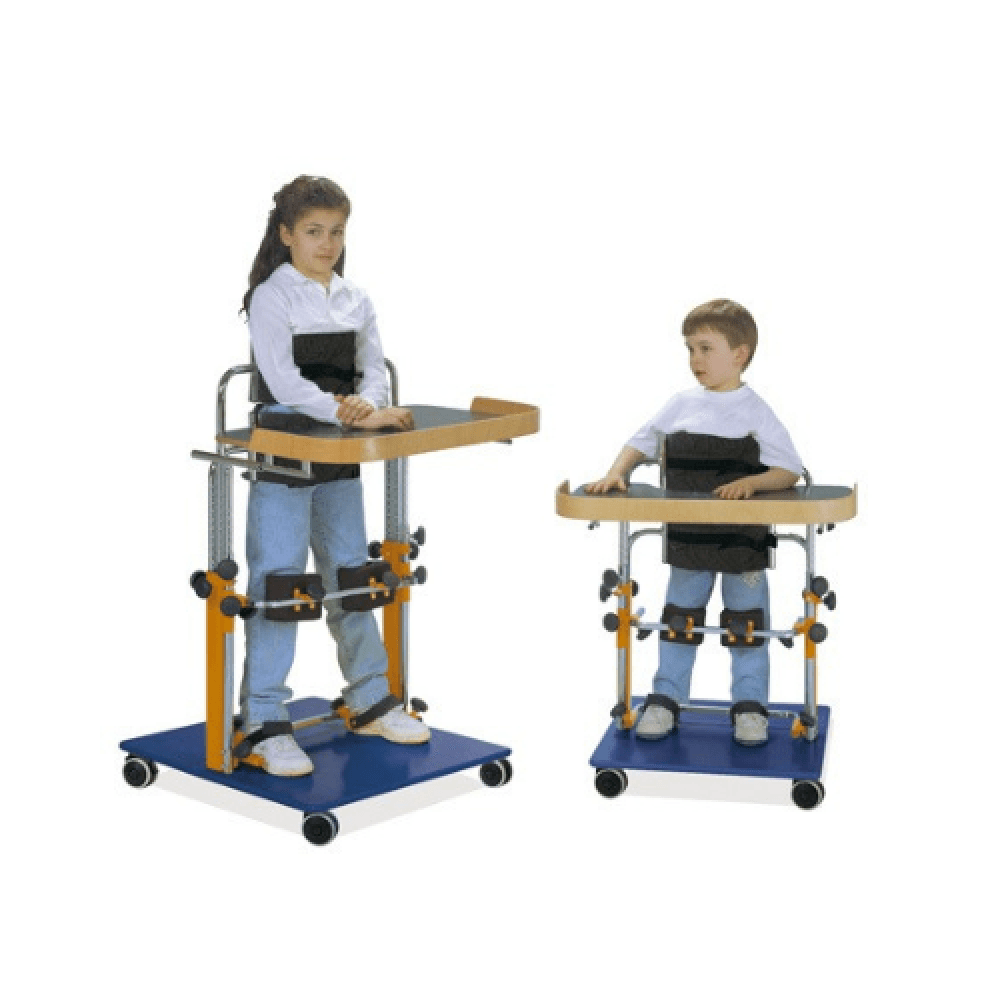
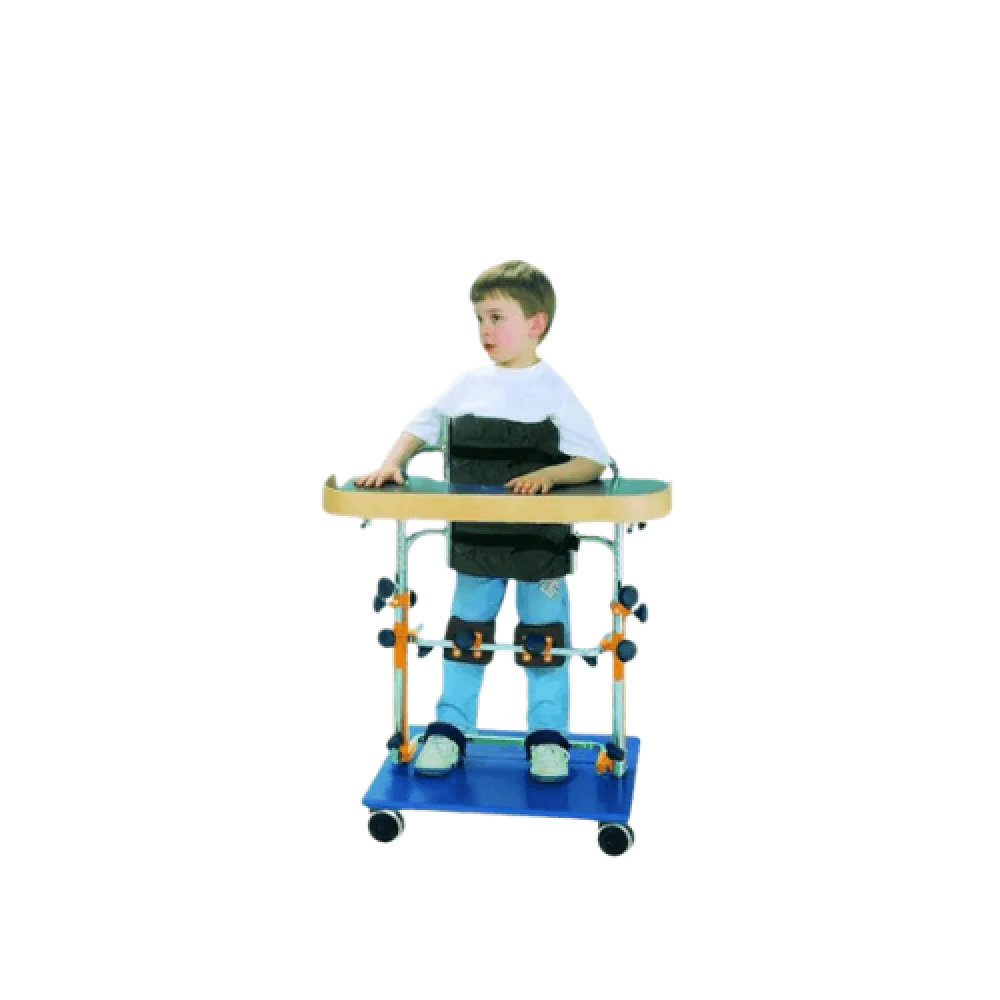
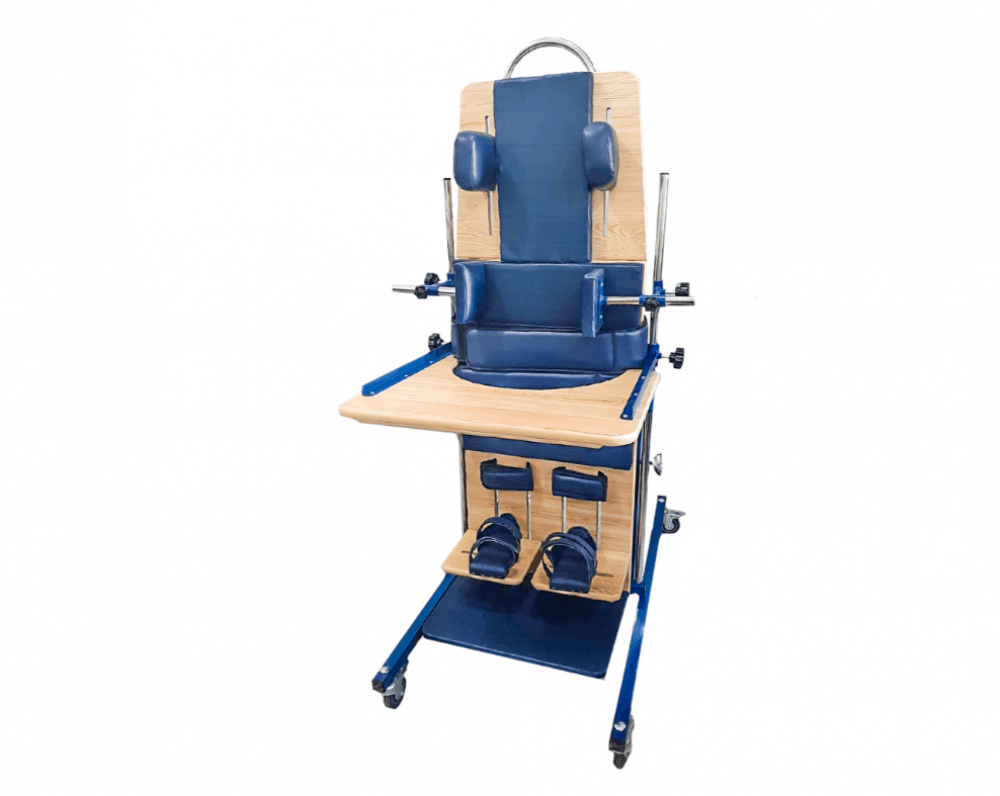
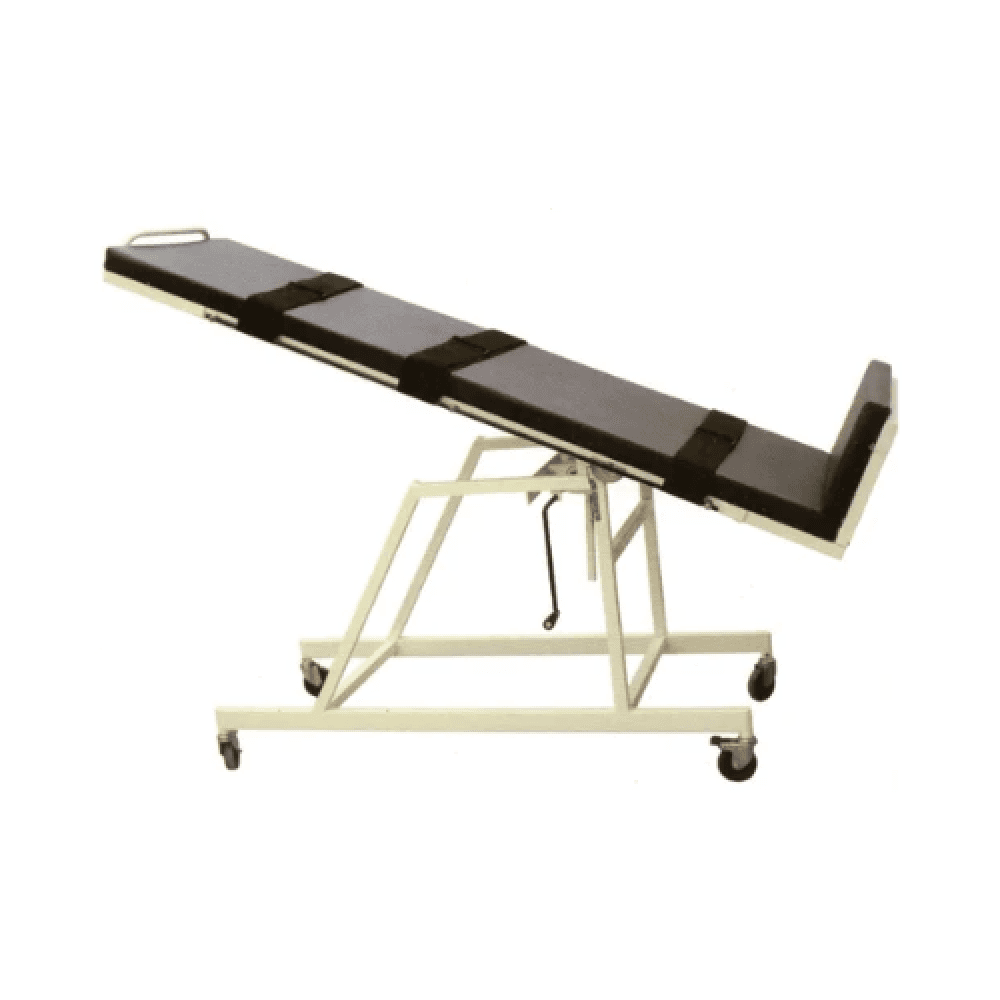
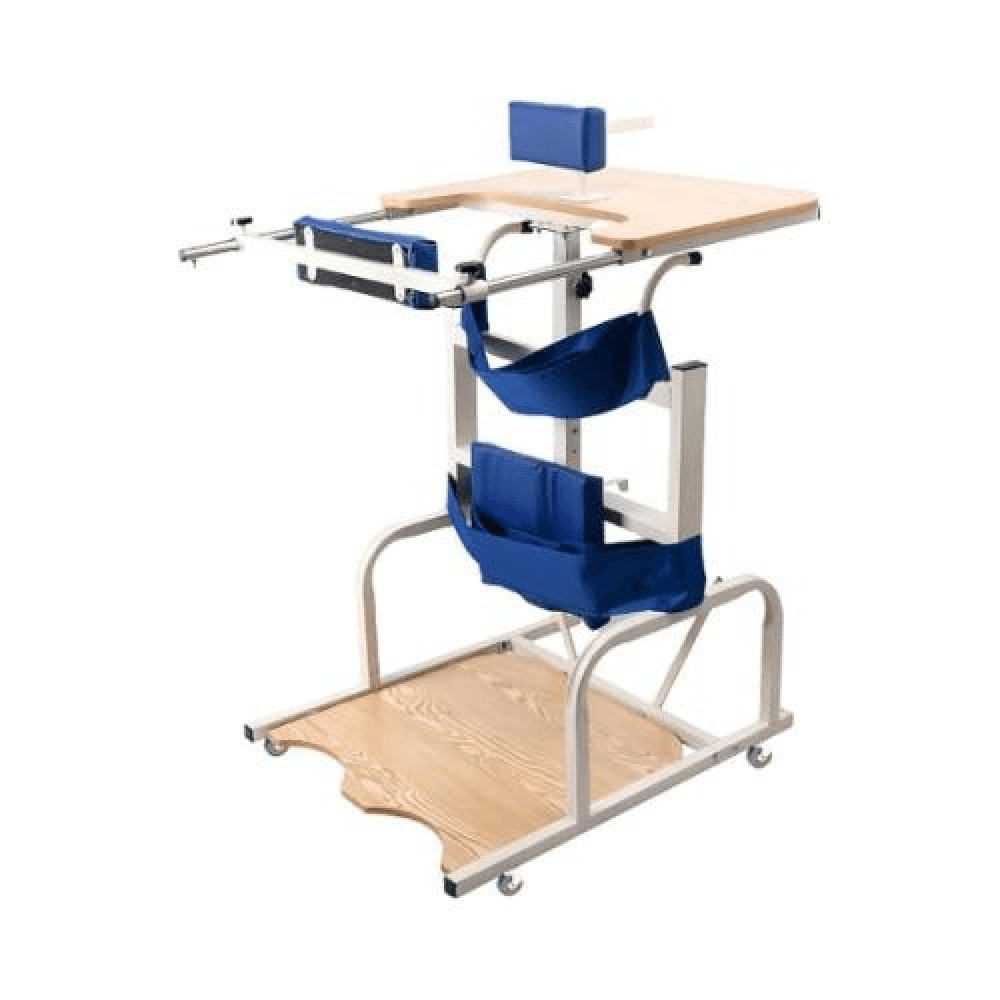
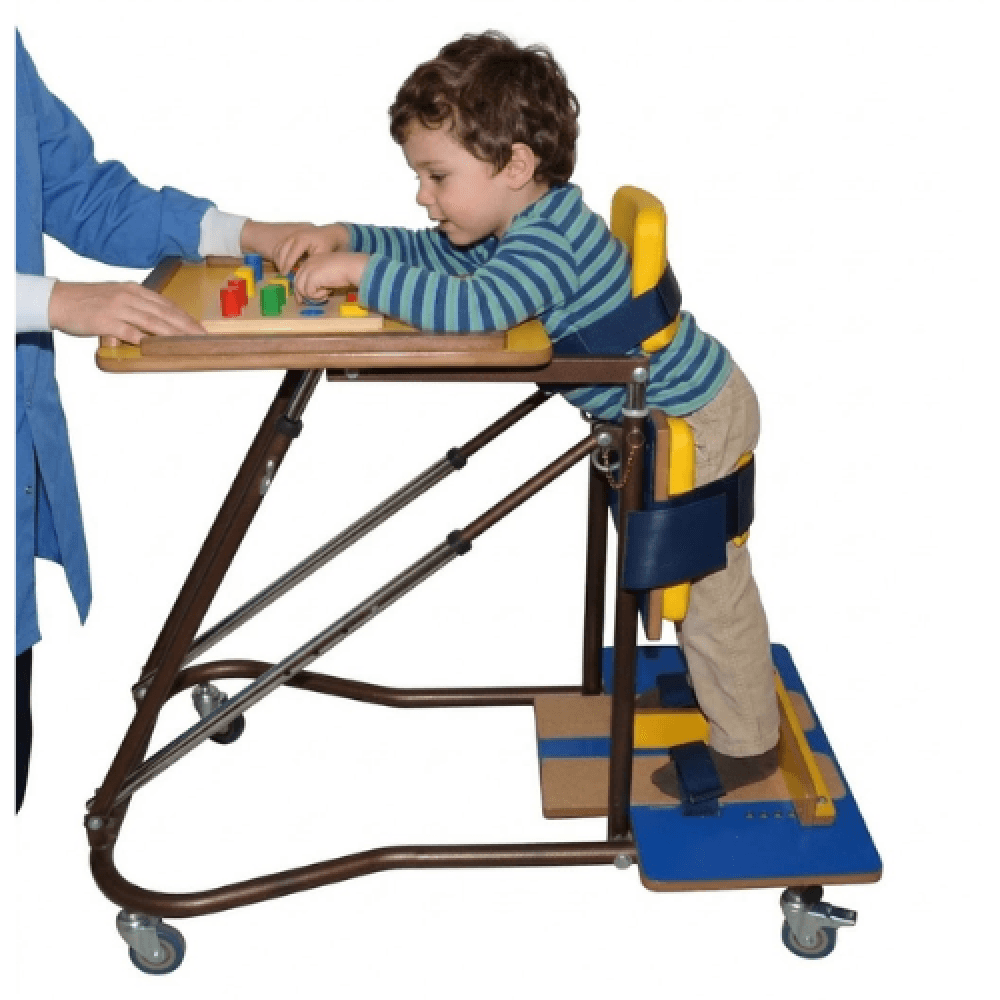
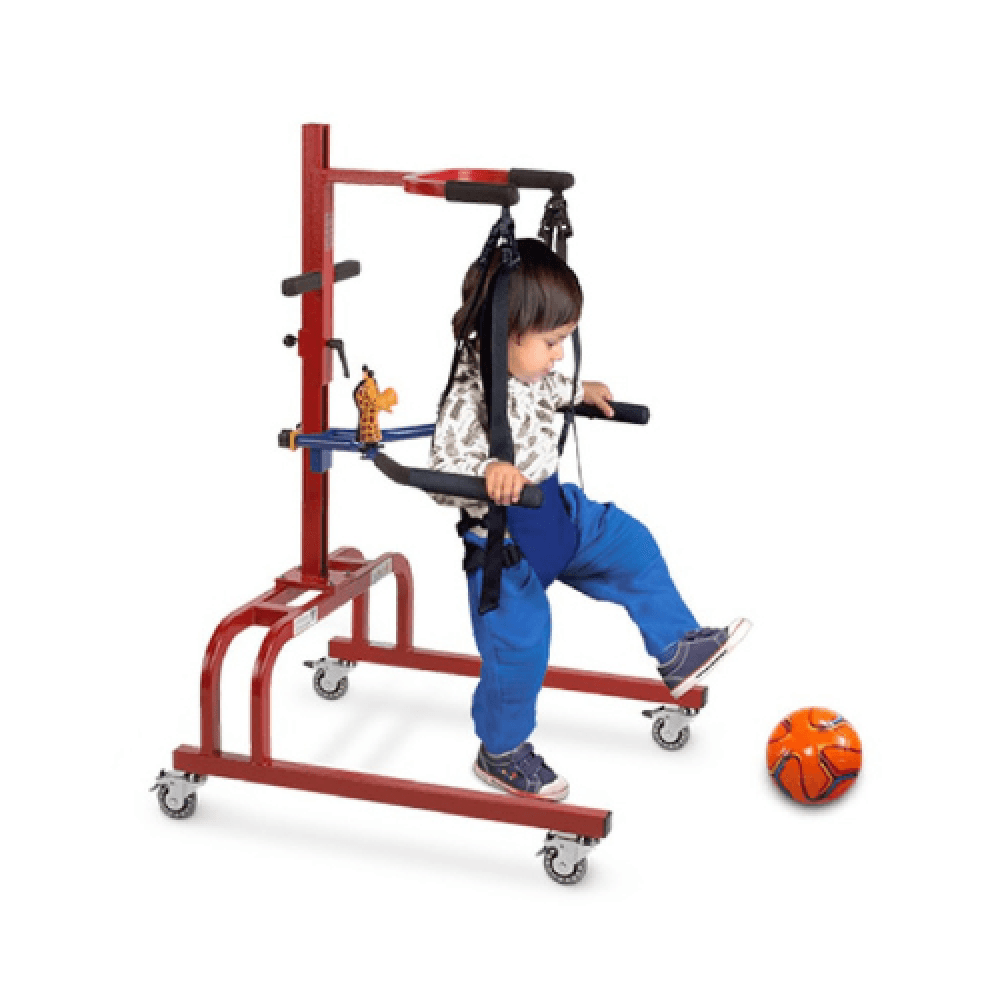
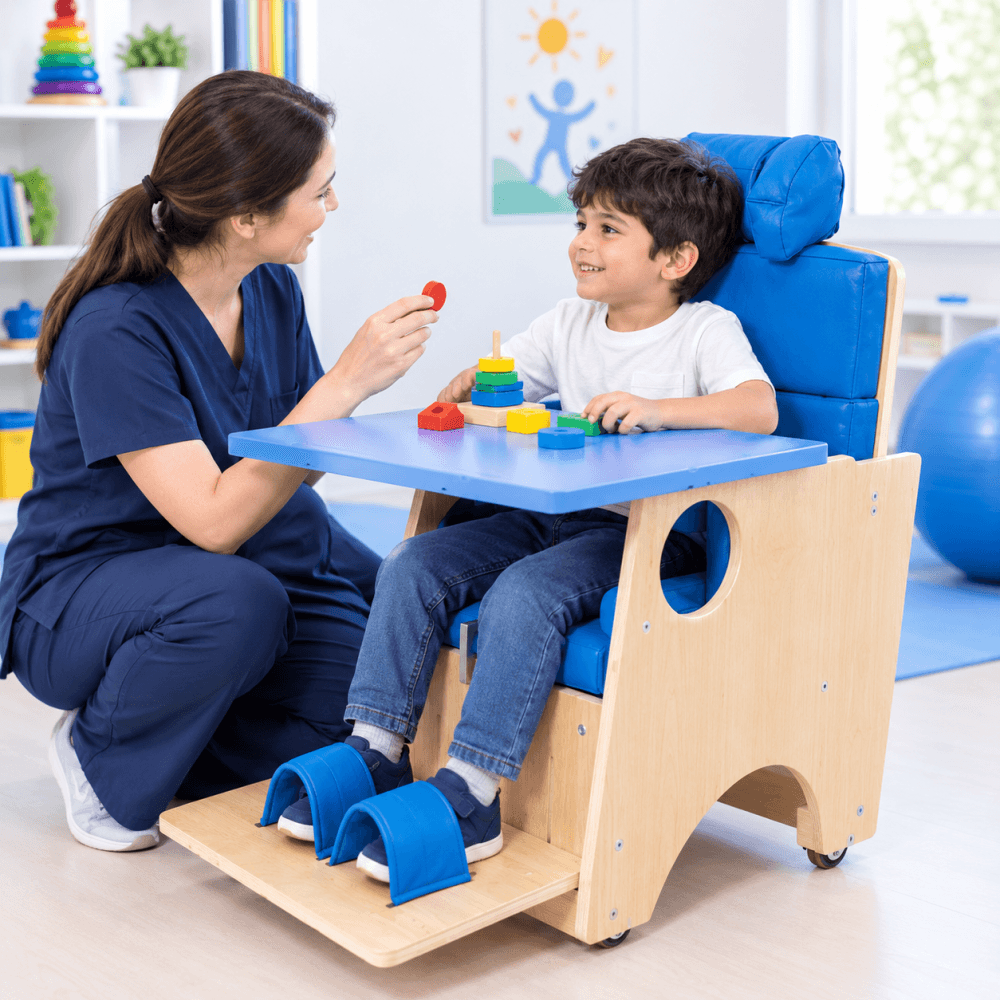
The pediatric standing frame with anterior table is a rehabilitation device designed to support safe, upright positioning for children who need assistance with standing. It promotes proper alignment, balance training, and progressive weight-bearing, and includes a work surface for play, learning, and therapy to encourage longer standing sessions.
Key features
- Therapeutic design to promote correct standing posture.
- Anterior activity table for educational tasks, play, and therapy.
- Aids balance and motor control training.
- Supports strengthening of the legs, back, and trunk.
- Promotes spinal and pelvic alignment.
- Secure stabilization straps for the trunk, knees, and feet.
- Height adjustment to accommodate growth.
- Wheels with braking system for mobility and safety.
- Durable construction suitable for frequent clinical use.
- Appropriate for hospitals, rehabilitation centers, and supervised home use.
Therapeutic benefits
With regular use, a standing frame can help:
- Improve standing ability and tolerance.
- Increase bone density and reduce risk of fragility.
- Reduce muscle contractures.
- Enhance joint flexibility.
- Improve circulation.
- Support gastrointestinal function.
- Support respiratory function.
- Enhance sensory and cognitive engagement.
- Increase independence and confidence.
- Improve participation in daily and educational activities.
Suitable patient groups
- Cerebral palsy.
- Motor development delay.
- Muscular dystrophy.
- Spinal cord injury.
- Spina bifida.
- Brain injury.
- Muscle weakness.
- Balance disorders.
- Post-operative rehabilitation.
- Pediatric physical therapy programs.
- Pediatric occupational therapy.
Typical settings
- Physical therapy centers.
- Medical rehabilitation centers.
- Daycare centers.
- Schools and special education centers.
- Hospitals and clinics.
- Home use under professional supervision.
Clinical rationale
Standing frames are commonly incorporated into pediatric rehabilitation programs to enable gradual weight-bearing, improve body alignment, and facilitate participation in play and learning while standing, supporting therapeutic goals and daily activity engagement.